How to Remove the Login to Continue Website Popups
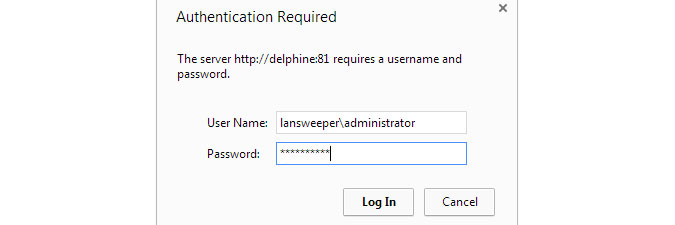
By default, the Lansweeper web console presents you with a gray and orange login screen. On this screen, you can either log in with the built-in administrator or with a Windows user account and password. You can log in with a Windows user that exists locally on your Lansweeper server, a Windows user in your Lansweeper server's domain or a Windows user in a trusted domain. If you enable authentication in your web server settings, the gray and orange login screen disappears and the login process is handled by your web browser instead. You can have your web browser automatically log you in as your current Windows user or have it present a login prompt.
Whether your browser starts prompting you for a username and password depends on the web browser itself. Some browsers will by default prompt for credentials. Others will by default automatically log into the console as the currently logged on Windows user, a process that is often referred to as Single Sign-On or SSO. To enable or disable web browser login prompts, you will need to make changes to your browser configuration. This article contains configuration instructions for:
- Internet Explorer
- Mozilla Firefox
- Google Chrome
Managing login prompts in Internet Explorer
To enable or disable login prompts in Internet Explorer, do the following:
- Check which web server your Lansweeper web console is using by browsing to the following section of the console: Configuration\Website Settings
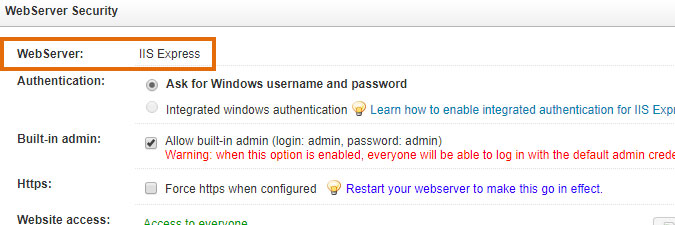
- Make sure your web server is properly configured. The knowledge base contains configuration instructions for IIS Express, IIS and UltiDev.
- If you want the web console to present you with the default gray and orange login screen, disable authentication in your web server settings.
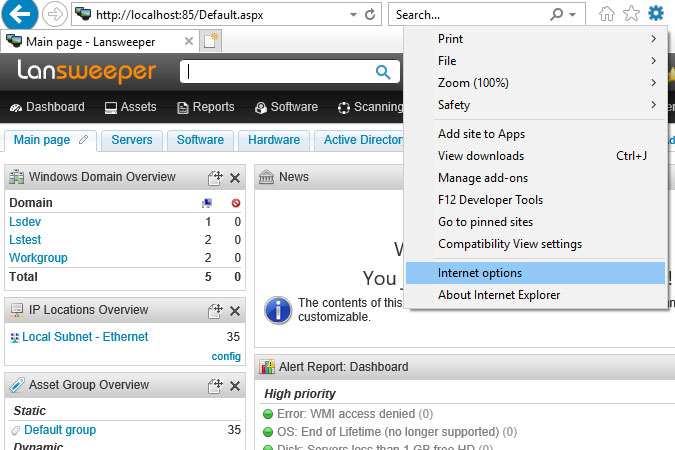
- If you want your web browser to either automatically log you in or present you with a login prompt, enable authentication in your web server settings. - Open Internet Explorer, select the Internet options menu item and open the Security tab of the popup window.
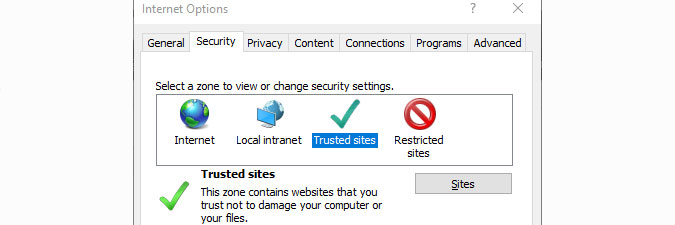
- Click the Trusted sites icon and hit the Sites button.
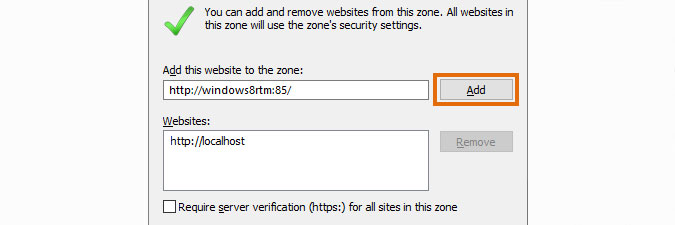
- Submit your Lansweeper web console's URL in the upper input box, hit Add and then Close. Web console URLs are generally formatted as follows:
http://<IP address or name of the machine hosting your web console>:<port number>/
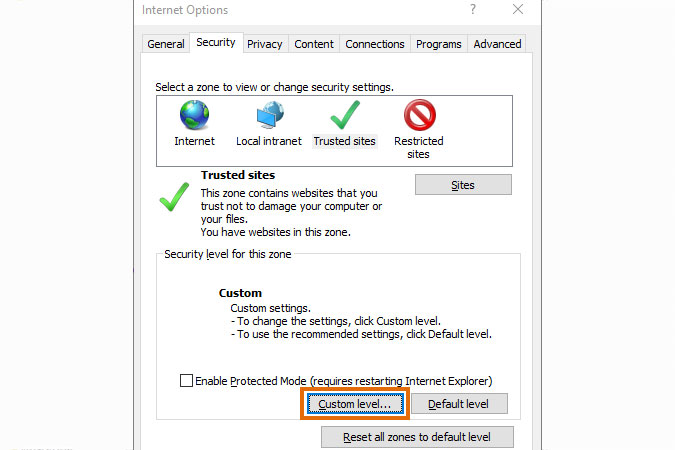
- Hit the Custom level... button.
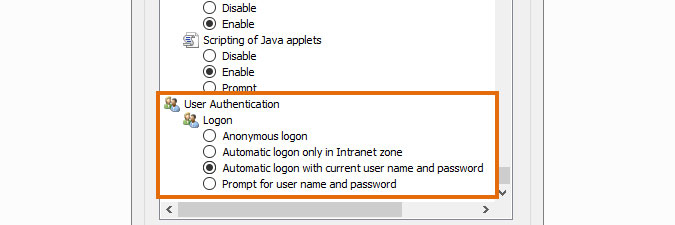
- Enable Prompt for user name and password to have Internet Explorer prompt for credentials. Enable Automatic logon with current user name and password to have Internet Explorer automatically log in as the currently logged on Windows user.
- Restart Internet Explorer. To ensure that Internet Explorer is fully stopped before restarting, you can open Windows Task Manager (Ctrl+Shift+Esc), right-click the iexplore.exe process(es) under Processes and select End Process.
Managing login prompts in Mozilla Firefox
To enable or disable login prompts in Mozilla Firefox, do the following:
- Check which web server your Lansweeper web console is using by browsing to the following section of the console: Configuration\Website Settings
- Make sure your web server is properly configured. The knowledge base contains configuration instructions for IIS Express, IIS and UltiDev.
- If you want the web console to present you with the default gray and orange login screen, disable authentication in your web server settings.
- If you want your web browser to either automatically log you in or present you with a login prompt, enable authentication in your web server settings. - Open Firefox, type about:config into the address bar and hit Enter.
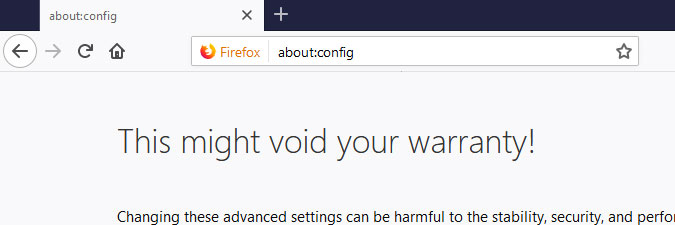
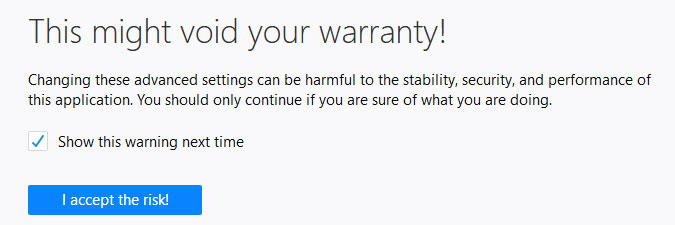
- Firefox will warn you that incorrectly editing your settings can lead to stability, security and performance issues. Hit I accept the risk!
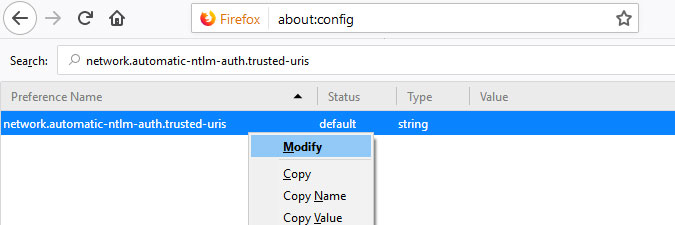
- Perform a search for network.automatic-ntlm-auth.trusted-uris in the available search bar, right-click the setting and select Modify
- The resulting popup lists websites that Firefox will automatically log into. Remove your Lansweeper web console's URL from this popup to have Firefox prompt for credentials. Add your console's URL to have Firefox automatically log in as the currently logged on Windows user. If you already disabled prompts for another website, you can use a comma separated list to add the Lansweeper web console. Lansweeper web console URLs are generally formatted as follows:
http://<IP address or name of the machine hosting your web console>:<port number>/

- Restart Firefox. To ensure that Firefox is fully stopped before restarting, you can open Windows Task Manager (Ctrl+Shift+Esc), right-click the firefox.exe process(es) under Processes and select End Process.
Managing login prompts in Google Chrome
To enable or disable login prompts in Google Chrome, do the following:
- Check which web server your Lansweeper web console is using by browsing to the following section of the console: Configuration\Website Settings
- Make sure your web server is properly configured. The knowledge base contains configuration instructions for IIS Express, IIS and UltiDev.
- If you want the web console to present you with the default gray and orange login screen, disable authentication in your web server settings.
- If you want your web browser to either automatically log you in or present you with a login prompt, enable authentication in your web server settings. - Follow the Internet Explorer configuration instructions from earlier on in this article. Chrome uses the same settings as Internet Explorer. If Internet Explorer is configured to prompt for credentials, Chrome will prompt as well. If Internet Explorer is configured to automatically log in, Chrome will automatically log in as well.
- Restart Chrome if it was running. To ensure that Chrome is fully stopped before restarting, you can open Windows Task Manager (Ctrl+Shift+Esc), right-click the chrome.exe process(es) under Processes and select End Process.
Related Articles
Source: https://www.lansweeper.com/knowledgebase/enabling-or-disabling-login-prompts/
0 Response to "How to Remove the Login to Continue Website Popups"
Post a Comment